
The Chicago Bears have recently captured the attention of the NFL world not only because of their on-field performance but also due to a series of revelations from head coach Ben Johnson, who has shared insights that have stunned analysts, fans, and rival teams alike.
Johnson, at only 39 years old, is quickly gaining a reputation as one of the league’s most strategic minds, blending traditional football wisdom with innovative approaches that leverage his team’s strengths.
In a recent podcast released by the Bears, Johnson made headlines by disclosing what he described as the team’s “secret weapon” that played a decisive role in their playoff victory over the Green Bay Packers three days ago.

In his candid remarks, Johnson stated, “It’s not Caleb Williams, it’s not D.J.
Moore, he is the real secret weapon for us in this playoff round…” His comment immediately sparked widespread discussion among NFL commentators and fans, as the Bears had faced a tough Green Bay Packers team that had been expected to dominate.
The revelation hinted at a player whose impact may not always be visible on stat sheets but who is nonetheless pivotal to the team’s strategy, preparation, and execution on the field.
Analysts have been trying to dissect Johnson’s statement to understand which player he was referring to, and what makes this individual so crucial to Chicago’s playoff campaign.

From a tactical standpoint, the notion of a “secret weapon” in football is often tied to versatility, situational awareness, and the ability to influence the game in ways that are not immediately obvious. This player, according to Johnson, embodies these qualities perfectly.
In modern football, where defensive schemes are complex and offenses are constantly adapting, having a player who can fill multiple roles, make decisive plays, and disrupt the opponent’s strategy is invaluable.
It allows the coaching staff to introduce unexpected elements into the game plan, keeping the opposition guessing and creating opportunities for the rest of the team to excel.
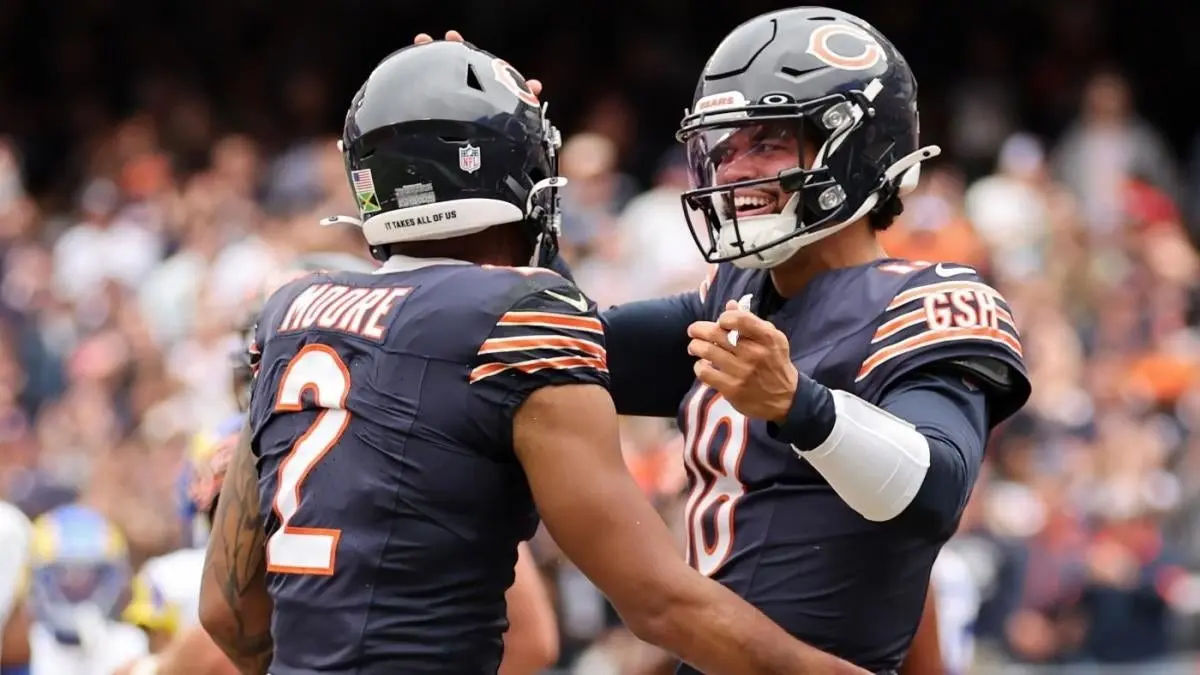
For the Chicago Bears, this secret weapon has reportedly been instrumental in both preparation and in-game execution. Johnson emphasized that this player’s contribution is not limited to measurable statistics like yards gained, touchdowns, or tackles.
Instead, he plays a critical role in influencing the rhythm of the game, maintaining team morale, and ensuring that the team can execute complex plays with precision. His presence provides a sense of stability and confidence that is especially important in high-pressure playoff situations.
According to insiders, the player’s ability to read the game, anticipate the opponent’s moves, and make split-second decisions has allowed the Bears to exploit weaknesses in Green Bay’s defense, ultimately leading to their successful outcome.
Moreover, Johnson’s revelation sheds light on the coach’s philosophy regarding team dynamics. Rather than relying solely on star players or headline-grabbing talent, Johnson has cultivated a system in which every team member has a clearly defined role and potential to impact the game.
By highlighting this secret weapon, Johnson reinforces the idea that preparation, understanding of the system, and situational intelligence are just as critical as raw athletic ability.
This approach emphasizes collective effort and highlights the importance of unsung heroes in the league—players who may not receive the limelight but are indispensable in achieving team success.
The timing of Johnson’s revelation is also noteworthy. Coming just three days after a high-stakes playoff victory, it not only provides fans with a behind-the-scenes look at the team’s strategy but also sends a subtle message to rival teams in the league.
By emphasizing that the Bears possess tactical depth and unexpected resources, Johnson is signaling to future opponents that preparing for Chicago requires more than just accounting for the obvious stars like Caleb Williams or D.J. Moore.
Teams must also consider the influence of players who operate under the radar but can change the course of a game when leveraged effectively.
From the perspective of the player in question, being identified as a “secret weapon” carries both opportunities and challenges. On one hand, it is a public acknowledgment of his importance and contribution to the team, providing recognition for efforts that may have previously gone unnoticed.
On the other hand, it places additional scrutiny and pressure on him to perform consistently, especially in critical moments like playoff games.
Maintaining composure, focus, and adaptability under such circumstances is essential, and Johnson’s comments suggest that this player has demonstrated the maturity and mental resilience required to thrive in high-stakes situations.
In addition to the individual implications, the revelation also has broader significance for the Chicago Bears as an organization. It reinforces the culture of teamwork, accountability, and strategic thinking that Johnson has been cultivating since taking over as head coach.
By publicly acknowledging the contributions of a key, though less celebrated, team member, Johnson sets an example for other players to recognize and value the efforts of their teammates.
This kind of culture can lead to stronger cohesion, improved communication, and a more adaptable and resilient team overall—factors that are critical in the unforgiving landscape of playoff football.
Analysts and commentators have begun speculating about who Johnson could be referring to. Various candidates have been suggested, ranging from versatile offensive linemen who can shift positions seamlessly, to defensive backs whose coverage skills disrupt opponent passing games, to special teams players capable of game-changing returns.
The ambiguity surrounding the identity of the secret weapon adds an element of intrigue, further highlighting Johnson’s tactical ingenuity. By keeping opponents guessing, the Bears gain a strategic advantage, as rival teams must prepare for multiple potential threats rather than focusing solely on the obvious stars.
The significance of this disclosure extends beyond a single game or playoff round. It reflects a broader trend in professional football, where strategic depth, versatility, and intellectual understanding of the game are increasingly valued.
Modern coaching emphasizes not just physical prowess but also the capacity to execute complex schemes, make rapid decisions, and contribute to the team’s overarching strategy in subtle ways.
In this context, the Bears’ secret weapon is emblematic of the type of player who embodies these traits, proving that success is often built on the contributions of those who operate quietly but effectively behind the scenes.
Furthermore, Johnson’s openness in discussing this aspect of the team provides fans and media with a rare glimpse into the inner workings of a playoff-caliber team.
In an era where professional sports are intensely scrutinized, understanding how coaches leverage talent and identify critical contributors adds depth to the public’s appreciation of the game.
It also enhances engagement, as fans are invited to analyze, debate, and speculate about strategic decisions, player roles, and the factors that lead to success on the field.
From a psychological perspective, Johnson’s decision to highlight a secret weapon also serves as a motivational tool. It signals to all players that consistent effort, adaptability, and intelligent play are recognized and valued, even if they do not always result in immediate public accolades.
This type of reinforcement can boost morale, encourage players to focus on execution and situational awareness, and foster a culture where every member understands the importance of their role in achieving team objectives.
The impact on future opponents cannot be understated. By revealing the existence of a secret weapon while withholding the player’s identity, Johnson introduces an element of uncertainty that complicates defensive planning and preparation.
Rival teams must account for unknown variables, adjust strategies, and remain adaptable themselves, all of which can create openings for Chicago to exploit during games.
This strategic ambiguity demonstrates the importance of psychological tactics in professional sports, where the perception of capability and the anticipation of potential threats can influence game outcomes as much as physical performance.
In conclusion, Ben Johnson’s revelation about the Chicago Bears’ secret weapon is more than a simple commentary on one player’s abilities—it is a window into the philosophy, strategy, and culture that he has cultivated within the team. It emphasizes the value of versatility, intelligence, and understated contributions in professional football.
It highlights the importance of effective communication, recognition, and psychological insight in building a team capable of excelling under pressure.
For fans, analysts, and opponents, it provides a tantalizing glimpse into the tactical depth of the Bears, while reminding the league that success is often determined not only by star power but also by the strategic deployment of every player on the roster.
As the playoffs continue, all eyes will be on Chicago to see how this secret weapon is utilized in upcoming games and how opposing teams respond to the challenge.
The revelation has already added a new layer of intrigue, discussion, and anticipation, demonstrating that in modern football, victory is as much about clever strategy and team cohesion as it is about athletic talent.