
“OLD WOMAN, WHO DO YOU THINK YOU ARE TO TALK TO ME LIKE THAT!” – Harper Murray’s Explosive Prime-Time Showdown with Kerri Walsh Jennings Leaves Volleyball World Reeling
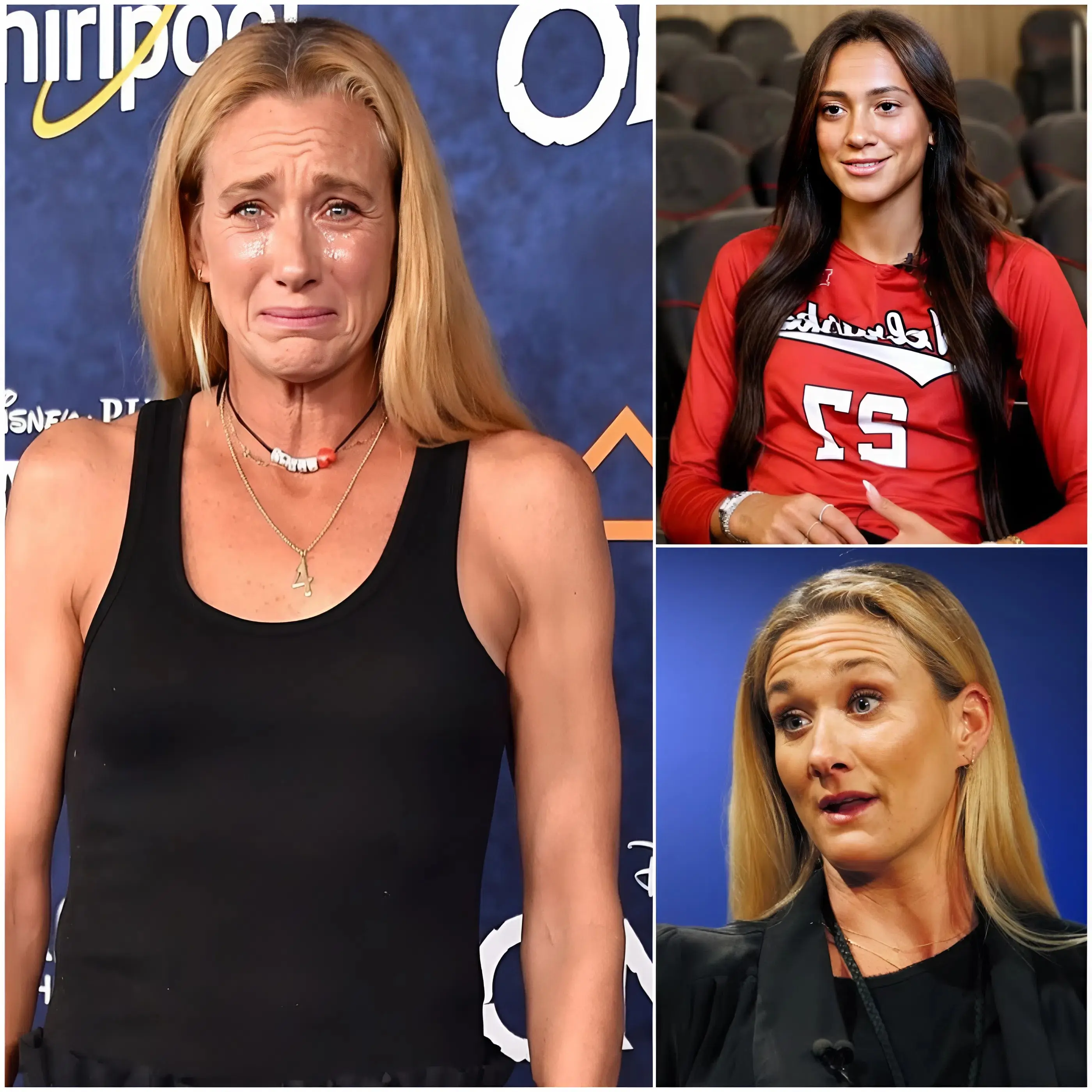
Los Angeles, January 14, 2026 – In what is already being called the most explosive live television interview in American sports history, Nebraska Cornhuskers superstar Harper Murray turned a routine pre-season sit-down on ESPN’s “Volleyball Spotlight” into a brutal, unfiltered reckoning.
Facing off against three-time Olympic gold medalist and longtime broadcast analyst Kerri Walsh Jennings—widely regarded as the “mother of American volleyball”—the 20-year-old phenom delivered a verbal kill shot that left the studio in stunned silence, the internet in flames, and Walsh Jennings visibly shaken.
The moment the cameras rolled, Walsh Jennings opened with her signature warm smile and a seemingly innocuous question about Murray’s preparation for the 2026 season. Murray, however, was not there to play nice.
After a brief exchange about leadership and team dynamics, Walsh Jennings—perhaps attempting to offer “motherly” advice—remarked: “You’re very talented, Harper, but you have to be careful not to let your personality overshadow the team. Volleyball is about humility, not headlines.”
The studio lights seemed to dim as Murray leaned forward, eyes locked on her interviewer.
“Old woman,” Murray said, voice low and razor-sharp, “who do you think you are to talk to me like that?”
The words landed like a spike straight to the chest. Walsh Jennings froze. Her practiced broadcaster smile flickered, then cracked. The camera caught every micro-expression: the widening eyes, the trembling lower lip, the sudden stiffness in her shoulders.
Murray didn’t stop.
“For years you’ve sat up there in your commentary booth, passing judgment on every young player who dares to have a voice, a personality, or—God forbid—a different opinion than yours. You’ve called girls ‘arrogant’ for celebrating, ‘selfish’ for speaking out, ‘diva’ for existing.
But let’s be real: the only thing you’ve ever been jealous of is that we’re doing it louder, bolder, and without begging for your approval.”
The studio fell deathly quiet. No one breathed. Walsh Jennings opened her mouth, closed it, then forced a smile so brittle it looked painful.
“I… I’ve only ever wanted the best for the next generation,” she managed, voice quivering.
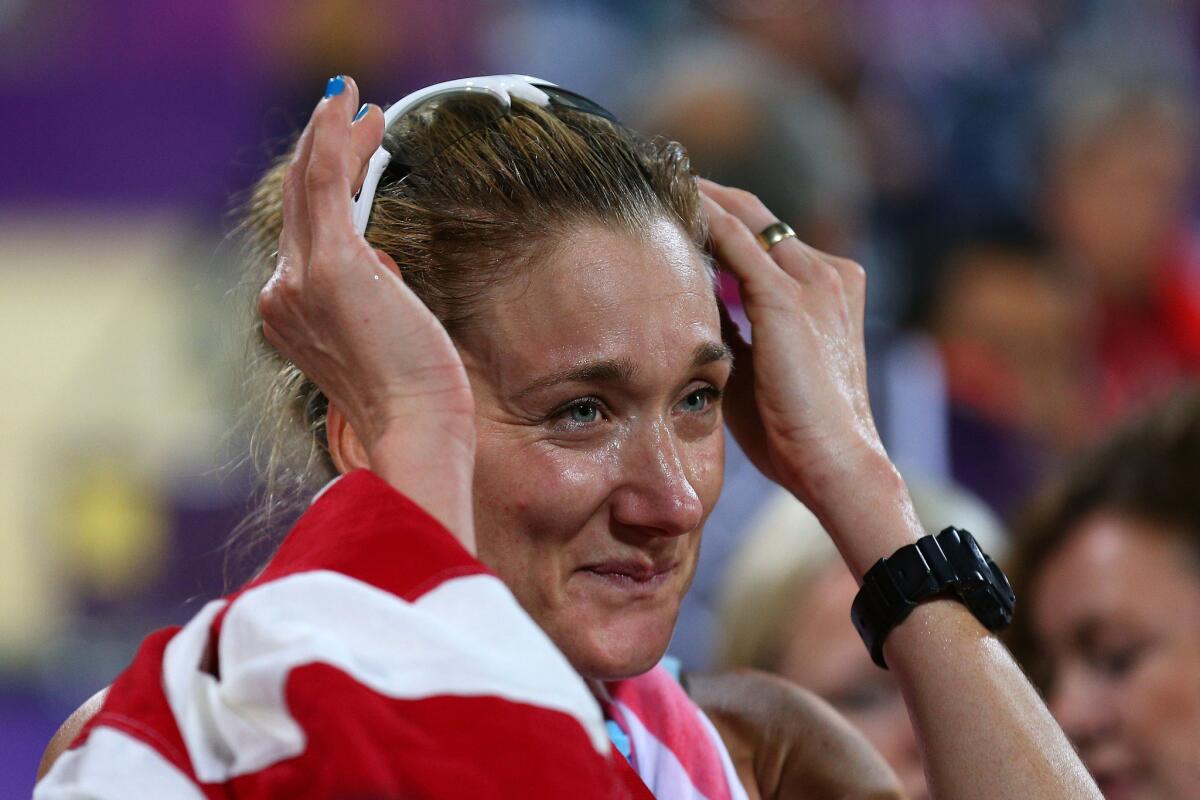
Murray’s response was merciless.
“Best for who? You spent twenty years being the golden child of beach volleyball, collecting medals and magazine covers, and the second someone like me comes along—someone who grew up without your privilege, who lost a father young, who fought through mental health battles in the public eye—you start whispering about ‘humility.’ You’ve never had to defend your right to exist in this sport the way we do.
You’ve never had people question whether you belong because of your faith, your politics, or your skin tone. So don’t sit here and lecture me about humility when what you really mean is obedience.”
Each sentence was delivered like a perfectly timed kill—precise, powerful, and impossible to block.
Walsh Jennings tried to pivot. “Harper, I’ve always supported young talent—”
“No,” Murray cut in. “You’ve supported the ones who stay in line. The ones who smile and nod and thank you for ‘paving the way.’ But the second someone like me—someone who won’t bow—comes along, you turn into the very thing you claim to fight against: the gatekeeper.”
The camera zoomed in on Walsh Jennings. Her eyes glistened. Her hands, folded neatly in her lap, began to tremble. She forced another smile, but it was clear: she was unraveling live on national television.
The host, veteran broadcaster Holly Rowe, attempted to interject. Murray raised a hand.
“I’m not done.”
For the next eight minutes, Murray systematically dismantled years of perceived slights: Walsh Jennings’ commentary on social media that many young players found condescending, her reluctance to celebrate athletes who didn’t fit the “traditional” mold, her public criticisms of players who spoke out on mental health, NIL deals, or political issues.
Murray named names, quoted specific tweets and broadcast clips, and tied every example back to one central charge: hypocrisy.
“You built your brand on being the perfect, all-American golden girl,” Murray said. “But perfection is easy when the world hands you every advantage.
Try being perfect when you’re grieving your father at six, when you’re the only Black girl on the team, when people whisper you’re ‘too aggressive’ or ‘too opinionated.’ Then come talk to me about humility.”
By the time Murray finished, the studio was silent again—this time the silence of awe. Then, slowly, the crew began to applaud. First one person, then another, until the entire set erupted in thunderous clapping. Walsh Jennings sat frozen, tears streaming down her face, unable to speak.
The interview ended abruptly. Rowe thanked both guests, but the damage was done.
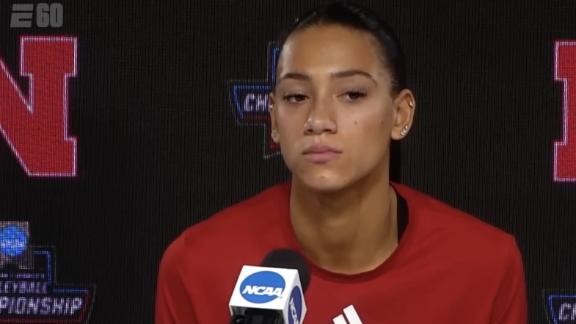
Within five minutes of the clip hitting social media, #HarperVsKerri was trending worldwide. Clips racked up tens of millions of views in hours. The internet split into two camps overnight:
Supporters called Murray “fearless,” “a truth-teller,” and “the voice a new generation needed.” Conservative commentators praised her for standing up to “establishment figures.” Many young athletes—especially women of color in volleyball—shared stories of feeling dismissed or judged by Walsh Jennings over the years.
Critics accused Murray of being disrespectful, ageist, and unnecessarily cruel. “She attacked a legend who paved the way,” read one viral thread.
“This is how you repay someone who gave everything to the sport?” LGBTQ+ advocates pointed to Murray’s earlier refusal to wear rainbow gear, framing her outburst as part of a larger pattern of divisiveness.
Walsh Jennings has not commented publicly since the interview. Sources close to her say she is “devastated” and “taking time to process.” Her long-standing image as the warm, maternal figure of American volleyball has taken a severe hit—many now see her as out of touch, even hypocritical.
For Harper Murray, the fallout is mixed. Sponsors have remained quiet, but ticket sales for Nebraska’s 2026 season opener have surged. Her NIL value has reportedly skyrocketed.
Whether the outburst galvanizes or alienates remains to be seen—but one thing is certain: Harper Murray has never played small, and she’s not starting now.
In a sport built on blocks and digs, Murray just delivered the most devastating kill of her career.
And the volleyball world is still reeling from the impact.