
In a world where acts of kindness often go unnoticed, one extraordinary gesture has captured the hearts of college football fans everywhere. Maria Thompson, a dedicated maintenance worker at Ohio State’s state-of-the-art football training facility, never expected her routine day on the job to turn into a life-changing moment.
But when she stepped in to help a young NCAA prospect—rising quarterback Julian Sayin—fix a malfunctioning utility cart, she unknowingly set in motion an unforgettable chain of events.
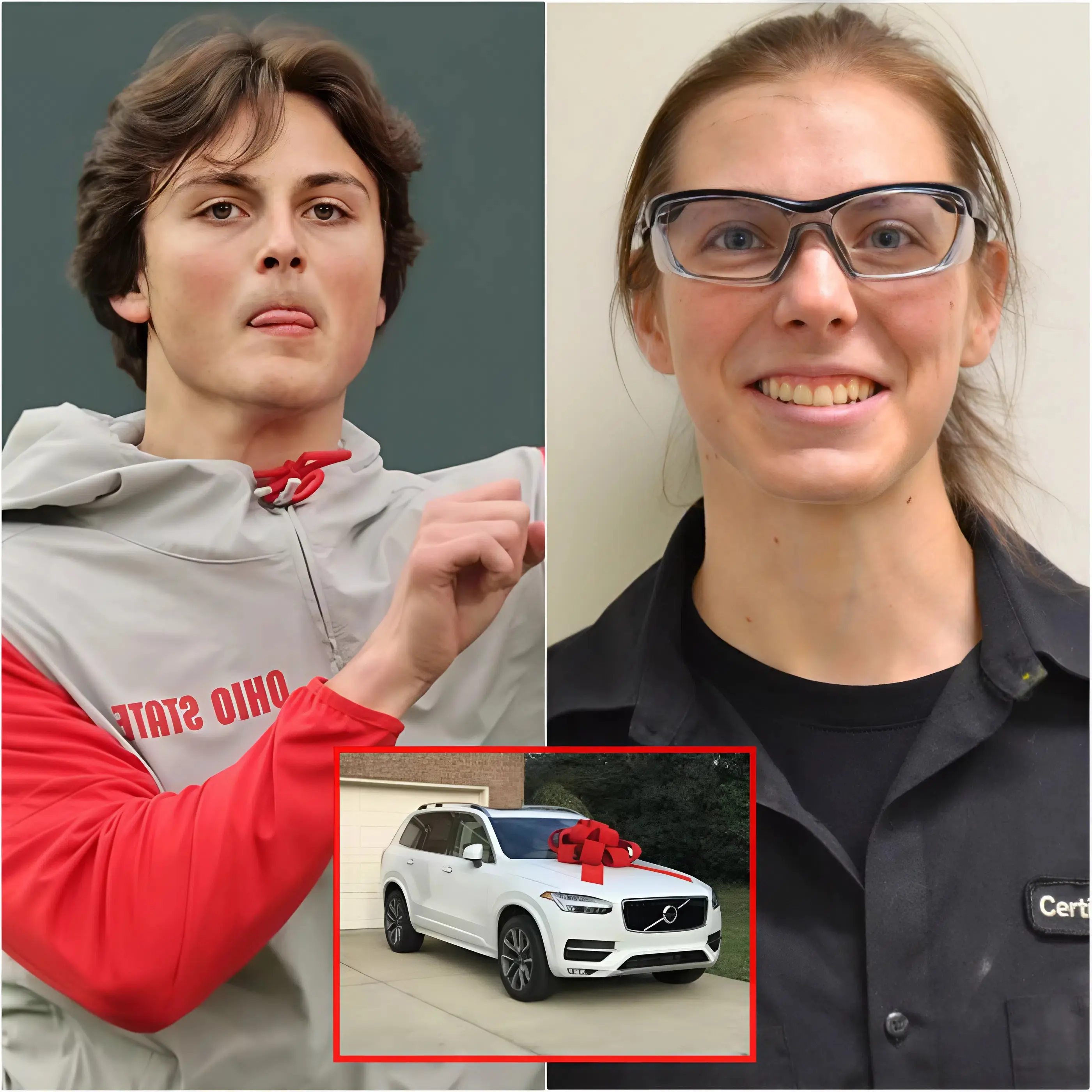
The very next morning, a gleaming white pickup truck appeared at her doorstep, a surprise gift from the grateful star that has left everyone talking about generosity, gratitude, and the power of small acts making big differences.
Maria Thompson’s story is one of quiet perseverance. For years, she’s been the unsung hero behind the scenes at Ohio State’s Woody Hayes Athletic Center, where elite athletes like Julian Sayin train, compete, and chase their dreams.
On a modest salary, Maria has juggled bills, family responsibilities, and the physical demands of her job—cleaning, repairing equipment, and keeping the facility running smoothly so players can focus on the field.
Life hasn’t always been kind to her; unexpected expenses, long hours, and the constant grind have tested her resilience time and again. Yet, Maria approaches every shift with the same warmth and work ethic, often going above and beyond without seeking recognition.
It was on one unassuming afternoon that fate intervened. Julian Sayin, the highly touted freshman quarterback who transferred to Ohio State after a stint at Alabama, was dealing with a broken utility cart that had stalled out near the equipment area.
The cart, essential for moving gear around the massive complex, was blocking access and causing a minor headache during a busy training day. Most people might have walked past or called for official maintenance, but Maria—happening to be nearby—noticed the issue right away.
With her toolkit in hand and years of hands-on experience, she quickly diagnosed the problem: a loose connection and a worn belt. Without hesitation, she rolled up her sleeves and got to work, chatting casually with the young athlete as she fixed it in under 20 minutes.
Julian, known among teammates for his humility and maturity beyond his years, was genuinely impressed. The 5-star recruit, who has already turned heads with his poise under pressure and leadership on the field, thanked Maria profusely.
What seemed like a simple favor to her was a meaningful interaction for him—one that highlighted the often-overlooked people who make elite programs possible. “She didn’t have to stop what she was doing,” a source close to the team shared. “But she did, and she did it with a smile.
Julian couldn’t stop talking about it.”
That evening, Julian reflected on the encounter. Coming from a background where hard work and kindness were instilled early, he felt compelled to do more than just say thank you. By the next morning, arrangements were quietly made.
A brand-new white pickup truck—practical, reliable, and perfectly suited for someone who spends her days hauling tools and supplies—pulled up to Maria’s modest home. Keys in hand, a note from Julian attached: “For the woman who fixed more than a cart that day. Thank you for your kindness.
You’ve earned this and so much more.”
The moment Maria opened her door and saw the truck is one she’ll never forget. Tears streamed down her face as neighbors gathered, phones out, capturing the pure joy. “I thought it was a mistake at first,” Maria later shared in an emotional interview.
“I help people every day because it’s the right thing to do.
I never imagined someone would notice, let alone do something like this.” The truck, fully loaded with features to make her commutes and errands easier, represented freedom from worry—reliable transportation that could replace her aging vehicle and ease daily struggles.
Word of the gesture spread like wildfire across social media and college football circles. Ohio State fans, already proud of their program’s culture, celebrated Julian’s character as much as his arm talent.
Posts flooded in: “This is what Buckeye Nation is about—heart and hustle on and off the field.” Teammates chimed in with praise, noting Julian’s reputation as a team-first player who values everyone in the building. Even coaches highlighted how such moments build the kind of unity that wins championships.
Julian Sayin, the California native who chose Ohio State to chase greatness under head coach Ryan Day, has quickly become a fan favorite not just for his on-field potential but for his off-field grace.
After navigating the high-profile transfer portal and stepping into a competitive quarterback room, he’s shown maturity that belies his age.
This act of kindness fits the pattern—whether visiting patients at Nationwide Children’s Hospital (where he once received care as a child) or quietly supporting those around him, Julian leads by example.
For Maria, the gift is transformative. The truck means shorter commutes, easier grocery runs, and the ability to help her family without the constant fear of breakdowns. But beyond the practical, it’s validation—proof that her hard work matters, that kindness circles back in unexpected ways.
“It restored my faith in people,” she said. “In a world that can feel tough, this reminds me there’s still good out there.”
Stories like this resonate deeply because they cut through the noise of scores, rankings, and recruiting drama. They remind us that behind every powerhouse program are real people—players with big hearts and workers with quiet dedication.
Julian Sayin’s thoughtful gesture to Maria Thompson isn’t just a feel-good tale; it’s a testament to gratitude, empathy, and the ripple effect of doing the right thing.
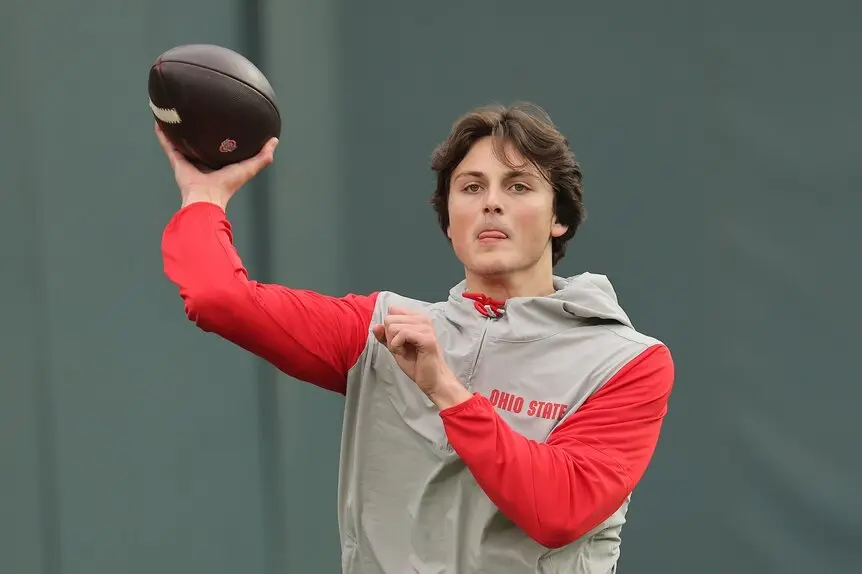
As Ohio State prepares for another big season, with Julian poised to make his mark, fans will cheer his throws and his touchdowns.
But many will also remember the day a utility cart breakdown led to something far greater: a life brightened, a community inspired, and proof that true champions show up in the smallest moments.
In the end, Maria Thompson’s story—and Julian Sayin’s kindness—proves that sometimes, the most powerful plays happen far from the field.